


Daily Horoscope 2026
4.6584.00 Reviews
App Specs
- Version
- 2.0.13
- Updated On
- License
- Free
- Downloads
- 500,000+
- Developer
- PDF, AI, Tools, Utilities, Useful Apps by Molibe
- Categories
- Lifestyle
- Platform
- Android
Screenshots
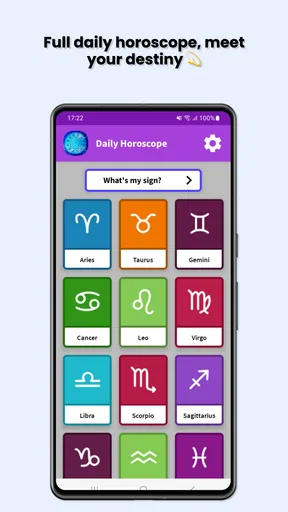
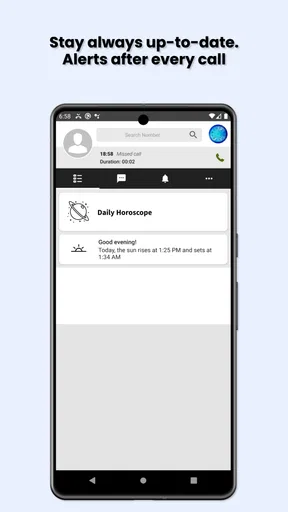
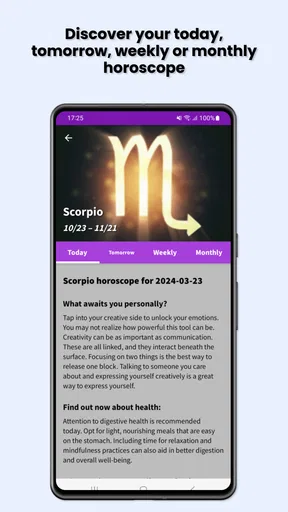
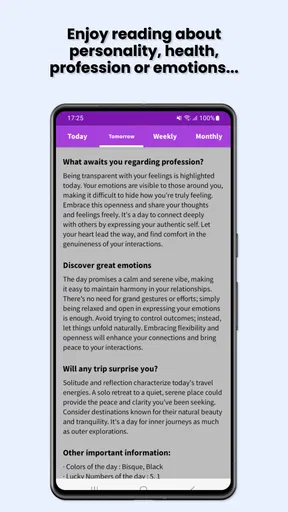
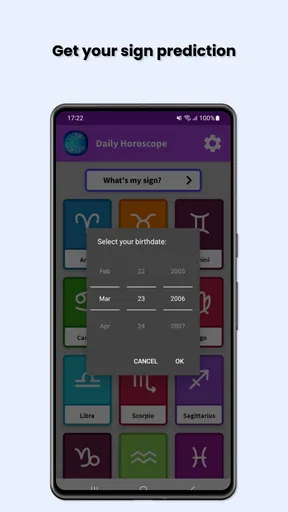
 Analysis by AppCompare
I approached Daily Horoscope 2026 as a lifestyle app for people who want astrology to fit into an ordinary phone routine rather than remain something they check only on a horoscope website. Its main idea is simple: bring a daily reading into the moments after calls, giving users a quick way to move from a practical conversation to something more reflective. I found that appealing because it does not require a long session or a deep commitment to astrology before you can understand what it offers.
The app is free to install, aimed at Everyone, and works on devices running Android 10 or later. It comes from PDF, AI, Tools, Utilities, Useful Apps by Molibe, a developer name that covers a broad range of utility-oriented products. The app has built a 4.6 average from around 22 thousand ratings and has passed half a million installs, so it is not an obscure experiment with no user history. Still, popularity is not the same as suitability, especially when an app is designed around reading, notifications, and personal interpretation.
How readable and easy to navigate is the daily experience?
My first impression is that the app’s value depends less on complicated navigation and more on whether the daily content can be read comfortably in short bursts. That makes it a good match for someone who checks a phone between tasks. I would use it while waiting for a meeting to begin, after finishing a call, or during a quiet morning coffee rather than expecting a full astrology consultation.
The store summary points to going beyond a basic daily horoscope after calls, and that positioning gives the app a distinct rhythm. Instead of treating astrology as a separate destination that you must remember to open, it connects the reading with a familiar phone habit. For users who already enjoy horoscopes, this can make the experience feel more regular. For newcomers, the short, repeatable format is less intimidating than a large astrology service filled with charts, compatibility tools, and specialist terminology.
I also think the app is easier to approach when you decide in advance what you want from it. If you want a brief prompt for the day, open it with that expectation. If you want detailed birth-chart analysis, long explanations, or evidence-based guidance, a dedicated astrology website or a more advanced astrology platform will probably serve you better. Daily Horoscope 2026 is most convincing as a lightweight daily companion, not as a complete replacement for every astrology resource.
For readers with limited attention or cognitive fatigue, a focused daily reading can be more manageable than a crowded information dashboard. The trade-off is that a compact experience may provide less context. A sentence about relationships, work, or mood can be easy to absorb, but it may also feel too broad if you are looking for a carefully explained interpretation. I recommend treating the text as a reflective prompt rather than a firm instruction.
One useful habit is to read the horoscope at a consistent point in your routine, then decide whether it actually helps you notice something during the day. I found that this is more rewarding than repeatedly reopening the app for reassurance. It turns the reading into a small moment of reflection instead of an endless search for a more favorable prediction.
Worth Reading Before You Choose

EA SPORTS FC Mobile 26 Is a Bigger Football Game, but It Takes Time

Flipboard Shows What News Apps Must Do Beyond the Feed

Switching to Android Auto Means Rethinking Your Driving Routine

Google Calendar Makes a Crowded Week Easier to Manage

Ludo King Makes the Most of the Minutes Between Plans

Baby Panda World Brings Quick Play to Modern Phones, but Its Game Library Feels Busy
What the app is like for different reading needs
People who prefer plain, quick information should find the concept approachable, while users who need highly structured reference material may want more control over how the content is presented. I would be cautious about recommending it to anyone who finds dense or changing text tiring until they have tested it on their own device. Phone displays, system text settings, contrast preferences, and individual vision needs can make the same screen feel very different from one person to another.
There is also an important distinction between reading difficulty and content difficulty. Even if the words are easy to understand, astrology can be vague by nature. Someone who prefers direct, measurable advice may find the interpretation unsatisfying. That is not a technical defect, but it is a real accessibility issue in the broader sense: an app is easier to use when its purpose matches the user’s way of processing information.
I would not rely on a horoscope as the only source of guidance for health, money, work, or relationships. The most inclusive way to use this app is to leave room for personal judgment. That approach helps users who enjoy symbolic or encouraging language without placing pressure on those who need concrete explanations.
Motor, sensory, and situational access in everyday use
Because this is a phone-based lifestyle app, motor access matters even when the interaction appears simple. A user with limited dexterity may prefer a routine that involves only a few deliberate actions rather than frequent scrolling, repeated taps, or precise controls. Daily Horoscope 2026 makes the most sense in that kind of low-effort session: open the app, read the relevant content, and leave when finished.
That simplicity can be helpful for people using a phone one-handed or while managing another task, but it also creates a practical warning. A horoscope is not something I would read while walking, driving, or handling equipment. The after-call concept may encourage quick checking, yet a safe routine means waiting until the conversation and any physical task are genuinely over. Situational accessibility is not just about whether an app opens easily; it is also about whether the surrounding habit encourages safe use.
For users with hearing loss, a reading-centered experience can be more convenient than an audio-first service because the essential content is encountered visually. At the same time, anyone who depends on spoken output should test how well the app works with the phone’s own screen-reading tools. I would not assume that every heading, control, or changing piece of content will be announced perfectly. The sensible approach is to install it, move through the main screen with the accessibility tools already enabled, and keep it only if the reading order makes sense.
Users with low vision may benefit from enlarging system text or display elements, but that can also create a new problem: larger text may wrap differently or require more scrolling. I would check the app under the exact display settings I use every day instead of judging it with the default configuration. A screen that looks comfortable in a quick test may become tiring after several minutes, particularly if the horoscope is read frequently.
Color sensitivity and light sensitivity deserve the same practical test. I would try the app in both a bright room and a dim room, with the phone’s preferred display settings active. If the reading depends heavily on subtle color differences, decorative backgrounds, or small contrast changes, that could make it less comfortable even when the words themselves are understandable. Since personal sensitivity varies widely, this is one of the areas where a short hands-on trial tells me more than a general promise of accessibility.
How it fits around calls, work, and family routines
The app’s after-call angle is particularly relevant for people who build routines around frequent phone conversations. Imagine finishing a call with a family member during a lunch break and taking one minute to read the day’s horoscope before returning to work. That is a realistic use case because it does not demand a special appointment. It can also suit someone who wants a small transition between social contact and the next task.
However, the same habit can be distracting. If you are in a busy workplace, caring for a child, commuting, or moving between appointments, opening a reading after every call may fragment your attention. I would use it as an intentional pause, not as an automatic response to every conversation. For users with attention-related difficulties, limiting the habit to one chosen time may prevent the app from becoming another source of interruptions.
It can also work well for people who prefer private, quiet reflection. A short reading can be checked without sound, which is useful in a waiting room, shared office, or bedroom. That said, privacy is not the same as secrecy. If your phone is visible to others, the app’s content may still reveal that you use astrology. Anyone who needs a discreet routine should consider where the phone is placed and whether notifications or previews are visible on the lock screen.
For older users or people new to smartphone apps, the free entry point lowers the risk of trying it. I would still recommend helping them establish a simple routine: identify the correct daily section, read it once, and avoid treating every suggestion as a decision rule. The Everyone age rating makes the app broadly approachable, but age suitability does not automatically mean that every user will find the interface equally comfortable.
Where the experience may still create barriers
The biggest barrier is likely to be the gap between a quick horoscope and a user’s need for depth. Someone who wants detailed explanations, personal chart calculations, or a broad set of astrology tools may feel that this app is too narrow. In that situation, a fuller astrology service is the better choice, even if it takes longer to learn. Daily Horoscope 2026 is strongest when convenience matters more than analytical detail.
Another barrier is the possibility of in-app purchases. The app is free, but optional items are listed from $4.49 to $15.99 each. That does not make the free experience unusable, yet it means I would pay attention before confirming anything. Users who are sensitive to unexpected spending, parents managing a shared device, or anyone who wants a completely cost-free experience should review each purchase screen carefully and keep the app’s free-versus-paid boundary in mind.
The current version is 2.0.13, and the app was released on March 23, 2024. Those details matter less than how the present build behaves on your particular phone, but they give useful context when troubleshooting. If the layout, text behavior, or assistive technology interaction is poor after an update, I would first check that the device meets the Android 10 minimum and then consider whether another app better matches my access needs.
There is also a content barrier for users who dislike generalized predictions. Horoscope writing often uses language that can be interpreted in several ways. I enjoy that flexibility when I am in a reflective mood, but I would not recommend the app to someone who wants unambiguous answers. A journaling app may be better for personal reflection without predictive language, while a calendar or task manager will be more useful for concrete planning.
Finally, the app may not be ideal for people who want astrology across several areas of life in one detailed workspace. Its appeal is the daily moment, not necessarily a complete record of changing patterns, long-term comparisons, or specialist study. That limitation is worth accepting before installing it, because no amount of regular use will turn a compact daily reader into a professional astrology research tool.
Small adjustments that make the app easier to live with
I would begin by checking the app when I have time to explore calmly, not immediately after a stressful call. That first session should answer practical questions: Can I locate the daily content without guessing? Is the text comfortable at my normal size? Does the app remain usable with my preferred display settings? Can I leave without accidentally entering a purchase flow? These checks take little time and prevent frustration later.
My second tip is to separate reading from reacting. I would read the horoscope, note one idea that feels relevant, and then close the app. If a message concerns a sensitive decision, I would compare it with real information and speak to someone I trust. This workflow preserves the enjoyable part of astrology while reducing the risk that vague wording controls an important choice.
My third tip is to choose one predictable access point during the day. For a person with a busy schedule, opening the app after the first call may be easier to remember than trying to check it at random. For someone who finds interruptions difficult, a quiet evening check may be better. The app’s usefulness improves when the routine is adapted to the person, rather than forcing the person to respond to the app.
My fourth tip is to test it with the accessibility features already used on the phone, including larger text, screen reading, magnification, or display adjustments. I would not assume that a lifestyle app is automatically easy for every ability level just because its purpose is simple. A few minutes of testing can reveal whether the content is genuinely comfortable or merely quick to open.
There is a final trade-off around expectations. The app has enough traction to suggest that many people find the format appealing, but a strong average rating cannot tell me whether it suits my reading style, beliefs, or sensory needs. I would use the free version as a trial, avoid purchasing anything until the daily routine feels worthwhile, and uninstall it if the content becomes repetitive or distracting.
My inclusive verdict on Daily Horoscope 2026
I see Daily Horoscope 2026 as a friendly, low-commitment lifestyle app for people who enjoy a short astrology reading woven into the rhythm of phone use. Its free starting point, Everyone rating, and focused daily purpose make it approachable. I especially like the idea of using it as a brief transition after a call, provided that the user chooses a safe and intentional moment rather than checking automatically.
Its inclusive strengths come from the modest scale of the experience: a reader can approach it in short sessions, use it silently, and adapt the routine to work, family, or quiet personal time. Those qualities may suit people who find large astrology platforms overwhelming. The app can also provide a gentle prompt for reflection without demanding technical knowledge of birth charts.
My reservations are just as clear. Accessibility depends on the actual screen, text behavior, display settings, and assistive tools on each device. The general horoscope format will not satisfy users who need detailed evidence, precise advice, or extensive personalization. The presence of optional purchases also means that people seeking a strictly free experience should remain attentive during use.
I would recommend trying it if you want a simple daily horoscope and are comfortable treating astrology as entertainment or reflection. I would skip it in favor of a specialized astrology service, a journaling tool, or a practical planning app if you need depth, concrete decisions, or stronger control over how information is organized. For me, the app works best when it stays small: one reading, one thought, and then back to real life.
Overall, Daily Horoscope 2026 is worth a cautious trial for the right audience. Its real strength is not predicting every part of your day, but making a brief reflective pause easy to reach. If the text is comfortable with your personal settings and the daily format matches your expectations, it can become a pleasant addition to a routine. If either accessibility or content depth falls short, there are better alternatives, and recognizing that early is part of using the app wisely.
Pros
- Covers all zodiac signs in one convenient app.
- Daily readings are quick to scan during a busy routine.
- Useful for casual astrology fans and horoscope beginners.
- 2026-focused content makes it easy to follow the year ahead.
- Simple format supports checking predictions without much effort.
Cons
- Horoscope readings may feel too general for individual users.
- Predictions are entertainment and should not guide major decisions.
- Some features may require an internet connection to load.
- Frequent notifications could become distracting if enabled.
- Astrology content may not appeal to users seeking factual guidance.
FAQs for Daily Horoscope 2026
What is Daily Horoscope 2026 and what does it offer?
Daily Horoscope 2026 is an astrology app that provides horoscope readings for the twelve zodiac signs throughout the year. After reviewing its main features, the app appears designed for users who enjoy checking daily predictions about love, work, mood, finances, and general life trends. It may also include weekly, monthly, or yearly insights, depending on the available version and selected sign.
How do I set up my zodiac sign in Daily Horoscope 2026?
When you first open Daily Horoscope 2026, you generally need to select your zodiac sign so the app can display personalized horoscope content. Some versions may ask for additional information, such as your birth date, while others work only with the chosen sign. You can usually change this selection later through the profile, settings, or horoscope preferences menu.
Can Daily Horoscope 2026 be used without an internet connection?
The availability of offline features can vary depending on how the app delivers its horoscope content. Previously loaded readings may remain accessible without an internet connection, but fresh daily predictions, advertisements, updates, or additional astrology sections may require mobile data or Wi-Fi. For the most reliable experience, open the app online at least once each day, especially after installing an update.
Is the information in Daily Horoscope 2026 scientifically accurate?
Daily Horoscope 2026 should be viewed as an entertainment and lifestyle app rather than a scientifically verified prediction tool. Its readings are based on astrology and are written in broad terms that many people may find relatable. The app can be enjoyable for reflection or starting a daily routine, but important decisions about health, money, relationships, education, or work should not rely solely on its horoscope content.
Does Daily Horoscope 2026 contain advertisements or paid features?
The free version of Daily Horoscope 2026 may include advertisements, optional purchases, or premium sections, depending on the platform and current release. Some features could be restricted until users watch an advertisement, subscribe, or make a one-time purchase. Before downloading, check the app-store listing for pricing, subscription details, permissions, and cancellation terms so there are no surprises after installation.


